Vietnamese Q&A

What’s the Difference Between ‘Muốn’ and ‘Thích’ in Vietnamese?
Understanding Desire and Preference in VietnameseWhen you start learning Vietnamese, expressing your feelings and needs is one of the first things you want to do....

Easy Tips for Understanding the Difference Between 'Đi' and 'Đến' in Vietnamese
Today, let's learn how to use two very common Vietnamese words: đi (to go) and đến (to arrive/come)....
How to Use 'Bị' and 'Được' in Vietnamese
Today, let's learn how to use two very common Vietnamese words: bị (to suffer from / a passive...
Tại sao người Việt Nam thường hỏi "Ăn Cơm Chưa?" thay vì "Xin chao"
Ở Việt Nam, khi gặp hàng xóm, đồng nghiệp hoặc người quen, bạn có thể nghe câu hỏi...

"Nhìn" vs. "Thấy" in Vietnamese: What's the Difference? (Look vs. See)
Q: "Both 'Nhìn' and 'Thấy' are translated as looking or seeing in English. Can I use them interchangeably,...
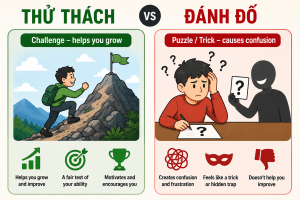
"Thử thách" vs "Đánh đố"
Although both "thử thách" and "đánh đố" involve giving someone a difficult task or question, they have different...
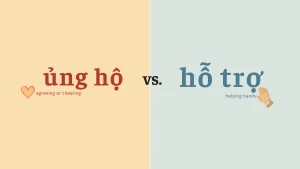
What is the difference between "ủng hộ" and "hỗ trợ" in Vietnamese?
In Vietnamese, hỗ trợ and ủng hộ both translate to “support,” but they are used in different contexts.Hỗ...

When should I use giữ gìn and when should I use chăm sóc in Vietnamese?
In Vietnamese, “giữ gìn” and “chăm sóc” are both related to taking care of something, but they focus...

Why does Vietnamese use the word "là" differently from English "to be"?
Learners are often confused because là does not work exactly like the English verb “to be.” In Vietnamese,...

Why do Vietnamese people sometimes put question particles like không, à, nhỉ, or hả at the end of a sentence?
Explanation:Vietnamese uses final particles to turn a statement into a question or to show the speaker’s attitude. Unlike...

North vs. South Vietnamese Vocabulary Guide
Master tone shifts, vocabulary differences, and everyday slang between Saigon and Hanoi.